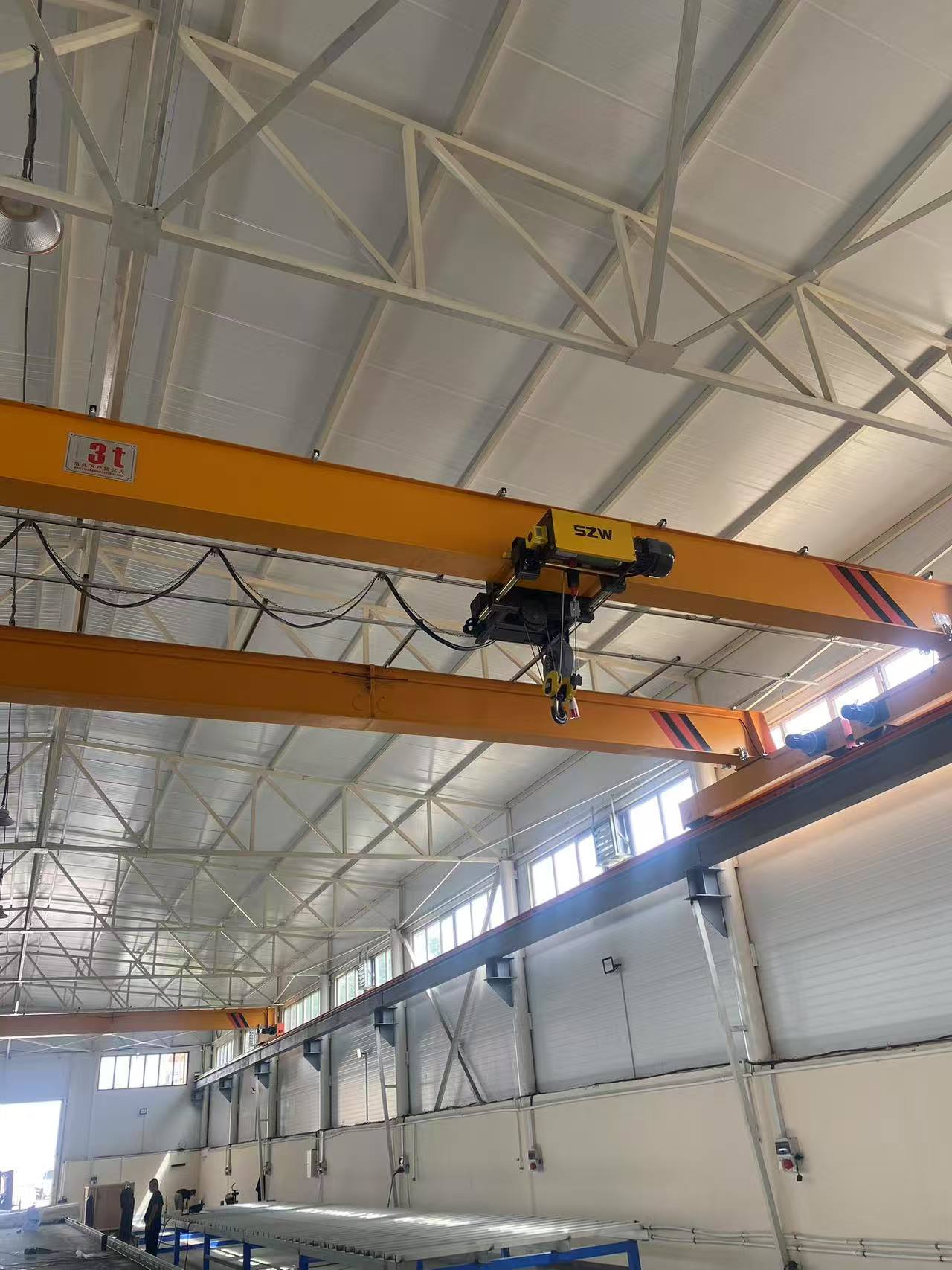
As core lifting equipment in industrial production, warehousing and logistics, the operational stability of overhead cranes is directly related to production efficiency, operational safety and property security. Under long-term high-intensity operating conditions, various faults are inevitable due to load fluctuations, environmental erosion and component wear. This article summarizes common faults of overhead cranes, provides targeted solutions and shares practical maintenance tips to help improve equipment reliability and service life.
I. Common Faults and Solutions
Most faults of overhead cranes occur in core components such as hoisting mechanisms, traveling mechanisms, electrical systems and metal structures. The solutions should accurately match the root causes.
(1) Hoisting Mechanism Faults
Common faults include steel wire rope damage, hook deformation/fracture, winch malfunctions and brake failure.
- Steel Wire Rope DamageSymptoms: Broken wires, wear, corrosion, deformation, reduced diameter or even fracture. Causes: Overload, friction, harsh environment, improper selection/lubrication. Solutions: Regular inspection, replacement when reaching scrap standards, proper lubrication with special grease, avoiding overload.
- Hook Deformation/FractureSymptoms: Bending, stretching, increased hook mouth size, cracks or fracture. Causes: Overload, fatigue wear, impact, poor material quality. Solutions: Prohibit overload, regular flaw detection (magnetic particle testing), correction or replacement of damaged hooks.
- Winch MalfunctionsSymptoms: Failure to start/slow rotation, abnormal vibration/noises, irregular rope winding. Causes: Motor/bearing damage, gear wear, insufficient lubrication, electrical faults. Solutions: Inspect and replace damaged components, replenish lubricants, adjust guiding devices, troubleshoot electrical systems.
- Brake FailureSymptoms: Ineffective braking, abnormal noises/vibrations, improper brake clearance. Causes: Wear of brake shoes, spring fatigue, oil contamination on brake wheels, stuck push rods. Solutions: Replace worn parts, clean brake wheels, adjust spring tension, ensure flexible push rod movement.
(2) Traveling Mechanism Faults
Common faults include wheel faults, track faults, reducer malfunctions and rail gnawing.
- Wheel FaultsSymptoms: Inflexible rotation, noises, rim wear/deformation, tread spalling. Causes: Bearing damage, insufficient lubrication, overload, poor track contact. Solutions: Replace bearings/wheels, regular lubrication, adjust wheel position for proper contact.
- Track FaultsSymptoms: Deformation, settlement, loose bolts, wear or irregular spacing. Causes: Foundation settlement, impact, poor installation. Solutions: Straighten tracks, reinforce foundation, tighten/replace bolts, clean track surfaces.
- Rail GnawingSymptoms: Severe friction between wheel rims and track sides, harsh noises, wear. Causes: Improper wheel installation, irregular track spacing, structural deformation. Solutions: Adjust wheel position, correct track spacing, straighten deformed structures, ensure synchronous motor operation.
(3) Electrical System Faults
Common faults include motor malfunctions, contactor/relay faults, line faults and control cabinet malfunctions.
- Motor MalfunctionsSymptoms: Failure to start, abnormal speed/vibration, overheating, electric leakage. Causes: Unstable voltage, winding faults, bearing damage, overload. Solutions: Check voltage, repair/replace motor/windings, ensure adequate heat dissipation, avoid overload.
- Line FaultsSymptoms: Open circuit, short circuit, insulation damage, loose connections. Causes: Vibration, corrosion, improper wiring. Solutions: Regular inspection, repair/replace damaged lines, tighten connections, adopt anti-corrosion measures.
(4) Metal Structure Faults
Common faults include main beam deformation, cracks and loose connecting bolts.
- Main Beam DeformationSymptoms: Deflection, camber, side bend, abnormal vibration. Causes: Overload, poor welding, foundation settlement. Solutions: Prohibit overload, professional straightening, reinforce foundation.
- CracksSymptoms: Cracks at weld joints or stress concentration areas. Causes: Welding defects, fatigue load, corrosion. Solutions: Regular non-destructive testing, repair cracks by welding, strengthen anti-corrosion treatment.
II. Maintenance Tips
- Establish Sound Maintenance System: Formulate detailed plans, maintain equipment files, conduct professional training for maintenance personnel.
- Strengthen Daily Inspection: Check key components and safety devices before operation; monitor operating status during operation; clean and inspect after operation.
- Good Lubrication Maintenance: Regularly lubricate moving parts with qualified lubricants; shorten lubrication cycle in harsh environments.
- Enhance Anti-Corrosion Treatment: Derust and paint metal structures regularly; adopt protective measures for corrosion-prone components.
- Regular Comprehensive Maintenance: Conduct non-destructive testing and performance tests (load test, brake test) periodically.
III. Conclusion
Troubleshooting and maintenance of overhead cranes are systematic and long-term tasks requiring professional knowledge and responsibility. Accurate fault identification and scientific solutions can quickly restore normal operation. Sound maintenance systems and regular inspections can effectively prevent faults, ensuring stable operation for industrial production and logistics.